You’ve probably seen people online asking ChatGPT to make meal plans, analyze calories, or explain nutrition terms. Some even call it their “virtual dietitian.” As someone who works at the intersection of nutrition, technology, and behavior change, I find this fascinating. ChatGPT is changing how people access information — including health and nutrition advice. And …

You’ve probably seen people online asking ChatGPT to make meal plans, analyze calories, or explain nutrition terms. Some even call it their “virtual dietitian.”
As someone who works at the intersection of nutrition, technology, and behavior change, I find this fascinating. ChatGPT is changing how people access information — including health and nutrition advice.
And according to a 2023 study by Manuel B. Garcia from the University of the Philippines, published in Applied System Innovation, ChatGPT does hold potential to improve nutrition knowledge. But like any new tool, it comes with both strengths and limits.
Let’s look at both sides.
What ChatGPT Does Well
- It simplifies learning. ChatGPT can explain complex topics — from macronutrients to portion sizes — in plain language, making nutrition knowledge more accessible.
- It personalizes information. You can ask for Filipino food examples, vegetarian options, or recipes that fit your preferences.
- It’s available anytime. For people without access to dietitians or reliable health information, ChatGPT can serve as a helpful starting point for guidance and awareness.
In short: it can make nutrition more approachable.
What ChatGPT Still Can’t Do
- Assess your body and context. It doesn’t see your lab results, medications, or symptoms.
- Read emotions or behavior. It can’t sense when “I’m eating healthy” really means “I’m skipping meals out of stress.”
- Monitor your progress. It can’t follow up, adjust plans, or give real-time feedback the way a coach or dietitian can.
These gaps matter because nutrition isn’t just data — it’s human behavior, emotion, and lived experience.
How to Use ChatGPT Wisely
The best approach is to use ChatGPT as a supplement, not a substitute.
Here’s how to make the most of it:
- Start with questions, not prescriptions. Ask ChatGPT to explain “why” before “what to eat.” Understanding builds awareness. Try this prompt:“I want to lose weight sustainably. Explain to me why caloric deficit and the right balance of macros are important. Then, create a list of foods I should be eating on a regular basis, and foods I should limit.”
- Always verify with experts. If you have a medical condition, review any advice with a registered dietitian or your doctor. Try this prompt:“Give me general meal ideas for someone managing high cholesterol — but remind me which parts I should confirm with a dietitian.”
- Use it as a learning partner. Let ChatGPT help you clarify concepts, plan grocery lists, or get recipe ideas — but take charge of applying them to your real life. Try this prompt:“I have these ingredients in my fridge and pantry: (example: chicken thighs, potatoes, canned mushrooms, leftover rice, pan de sal). Please create a 1-day sample meal plan with these ingredients and give suggestions on what else should I buy to make the meal plan healthier.”
- Pair it with credible resources. Combine ChatGPT with tools like Pinggang Pinoy, food labels, or consultations for practical, evidence-based guidance. Try this prompt: “My dietitian prescribed me with a [example: 2500 kcal per day, with 50% carbs, 20% protein, 30% fat and 30grams fiber]. Please create a 5-day sample meal plan based on the dietitian prescription, using Filipino foods and affordable ingredients.”
ChatGPT can’t replace the human touch — but it can extend the reach of nutrition education, especially where access to professionals is limited.
When used responsibly, it can empower you to make smarter food choices.
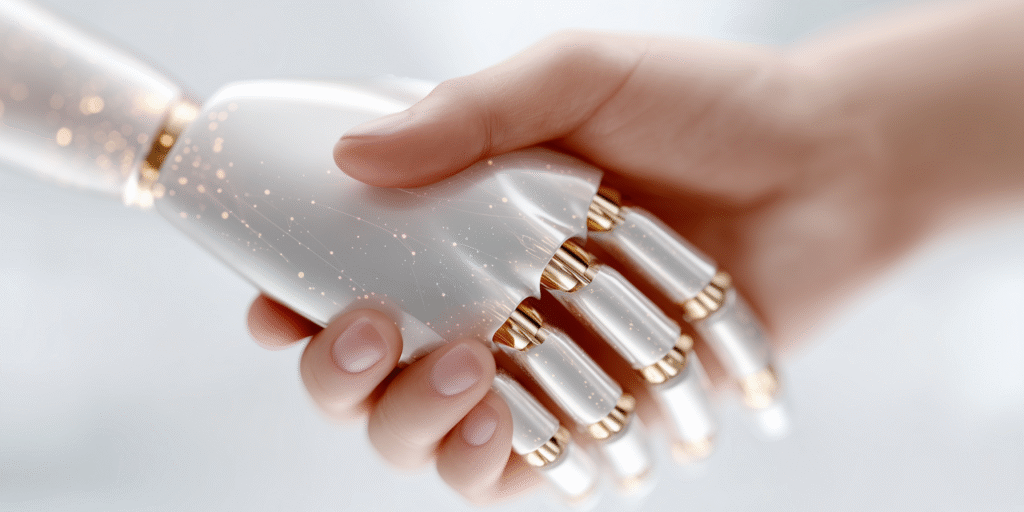
Because in the end, it’s not AI vs. dietitians.
It’s AI and dietitians – working together to make healthy eating easier and more accessible for everyone.
Reference:
Garcia, M.B. (2023). “ChatGPT as a Virtual Dietitian: Exploring Its Potential as a Tool for Improving Nutrition Knowledge.” Applied System Innovation, 6(5), 96. https://doi.org/10.3390/asi6050096